Choose a WhatsApp order catalogue when each sale needs a conversation. Choose an online store with checkout when buyers can select, pay and receive confirmation without waiting for an operator. Product count helps estimate work but does not decide the right approach.
A shop with twenty personalised items may need more coordination than one with two hundred standard products. Before commissioning an online store in Paraguay, map today's sales process and identify the time-consuming step.
A catalogue organises the enquiry
The website shows categories, photos, variants and prices. Buyers select products and open WhatsApp with a summary. You then agree availability, payment and delivery. It can have a cart without an automatic checkout: selecting products and collecting money are separate functions.
This suits made-to-order goods, measurements that need confirmation or delivery zones arranged individually. The main benefit is a more complete request rather than another conversation starting from scratch.
Our digital catalogue service describes that scope. No sales commission charged by the catalogue does not mean no operating costs. Hosting, maintenance, delivery and payment-provider charges remain separate considerations.
A store manages the purchase
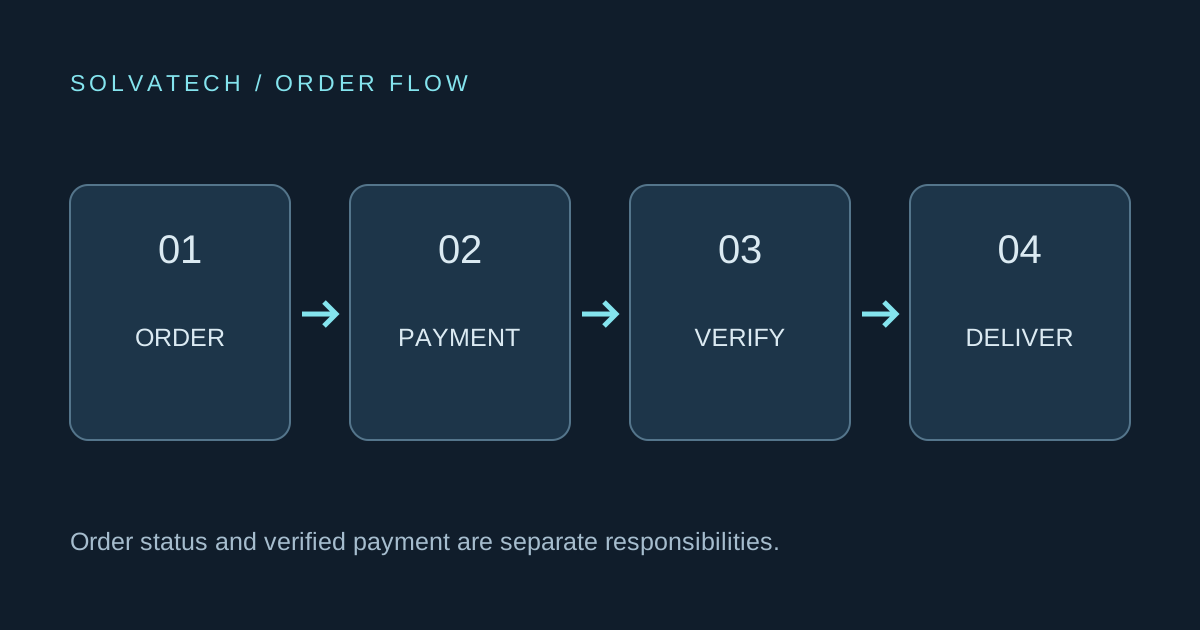
A store creates an identifiable order and its status. With payment integration, it checks payment confirmations. Inventory, delivery calculations and notifications depend on the agreed scope.
It needs explicit rules that you may currently decide in conversation: availability, reservation time, pending payments and cancellation handling. These rules belong in the specification before launch.
| Need | WhatsApp catalogue | Store with checkout |
|---|---|---|
| Pre-purchase questions | Conversation is expected | Product information and rules must answer them |
| Stock confirmation | Can be manual | Needs reliable availability |
| Payment confirmation | Manual or separate tool | Linked to the order if integrated |
| Tracking | Messages and business records | Statuses and scoped notifications |
| Product updates | Panel or support, as contracted | Panel and an update process |
Example: personalised products
An engraved cup business must confirm artwork, quantity and delivery date. Taking payment before reviewing those details can create extra work. A catalogue that assembles the request and starts a conversation may be the better first step.
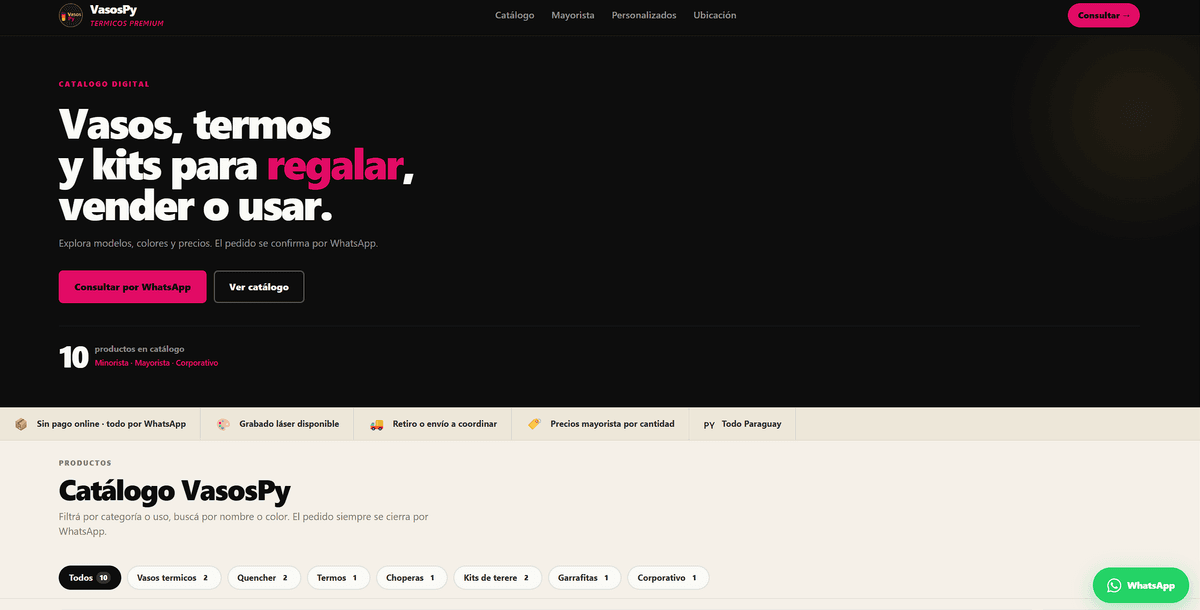
The portfolio includes the VasosPy sample, illustrating a catalogue and WhatsApp ordering. It is a visual reference, not evidence of measured revenue or customer growth.
Example: standard products and defined delivery
A shop selling accessories with known variants can support self-service purchases if inventory, price and shipping remain current. Otherwise online payments may accept orders for unavailable items.
Establish the stock source first, especially if products also sell in a physical shop. You may need synchronisation with another system or a confirmation step before payment.
Five questions before choosing
- Can you confirm price and delivery without a conversation?
- Are variants and available quantities current?
- How much time goes into reconstructing incomplete orders?
- Are delivery, return and cancellation rules clear?
- Who will maintain products and order status after launch?
If the process is still being defined, a catalogue can be a useful first stage. If the team repeatedly performs stable manual steps, automation is worth pricing.
Plan a later move to checkout
Request stable product and variant identifiers, organised categories and data export. Preserve URLs that receive visitors where possible. When they change, plan equivalent redirects rather than sending every old product URL to the homepage.
Consistent photos, prices, units and descriptions help either approach. Not every catalogue can be upgraded automatically: check its architecture and access before assuming the move will be simple.
Prepare a useful quote request
Provide sample products, variants, the stock source, other sales channels, delivery zones, enabled payment methods and the tasks you want automated. Identify who will maintain the website.
For payments, read payment links versus integrated gateways in Paraguay. For proposals, use the website quote checklist. Start with a digital catalogue for organised enquiries, or discuss a custom system for stock, orders and integrations.